
Ohio Water Damage Insurance Claims: Sudden Leak or Long-Term Problem?
Jun 15 • Keathley Claims Consultants
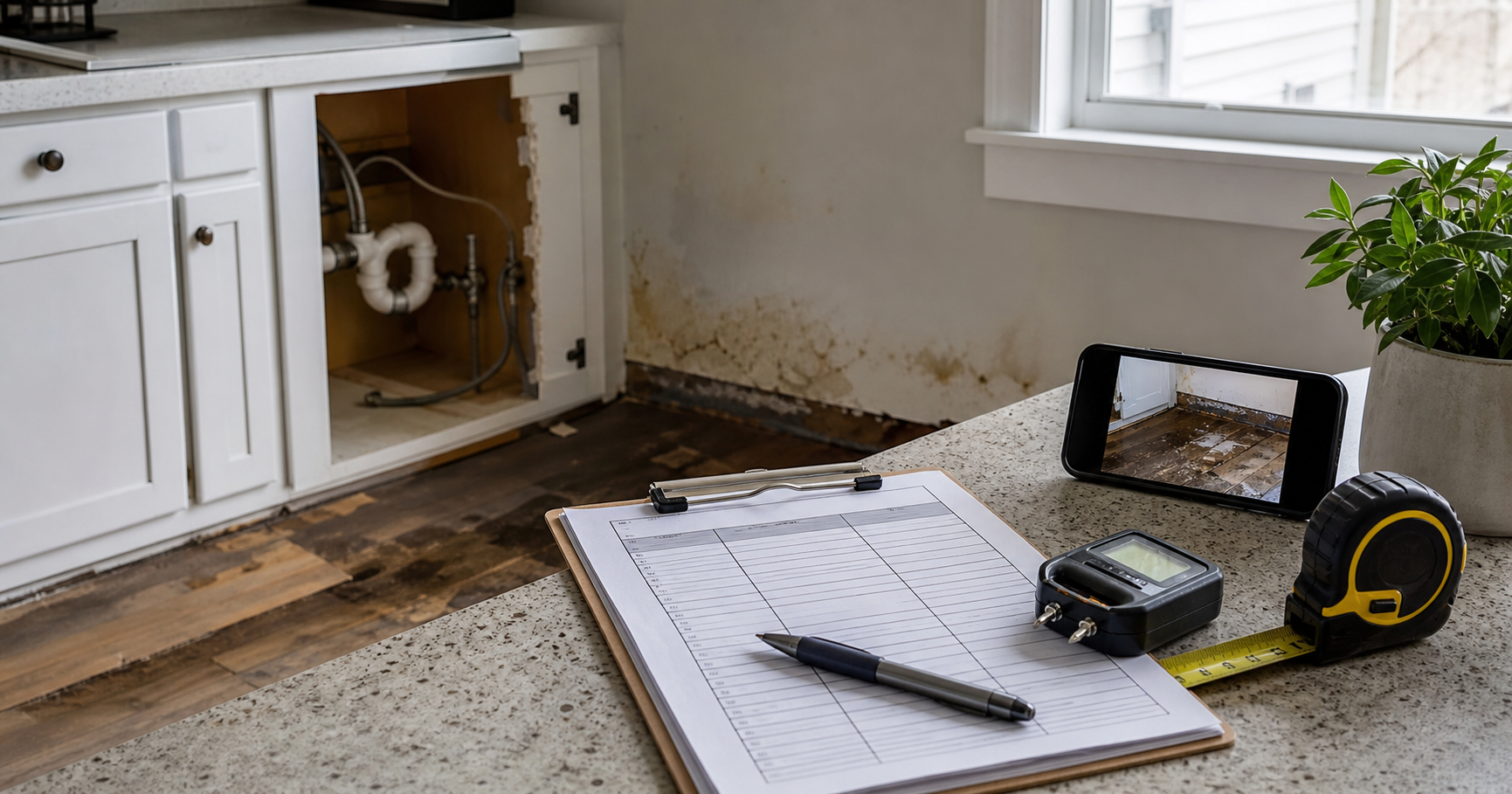
Water damage claims look simple until the insurance company starts asking questions.
A supply line bursts. A roof leak stains the ceiling. A toilet overflows upstairs. A dishwasher leaks into the kitchen floor. The homeowner reports the loss, expects the policy to respond, and then the carrier starts using words like “long-term seepage,” “maintenance,” “repeated leakage,” “wear and tear,” or “pre-existing damage.”
That language matters.
Most Ohio homeowners policies do not treat every water problem the same way. A sudden and accidental water loss may be covered. A slow leak that has been happening for weeks, months, or years may be excluded. The hard part is that real claims are rarely clean. Water travels. Materials hide damage. Adjusters miss moisture. Contractors remove damaged components before anyone documents them. Then the insurance company uses uncertainty to limit the claim.
At Keathley Claims Consultants, we see Ohio water damage claims get underpaid because the carrier focuses on the cheapest visible repair instead of the full damage pattern. Here is what homeowners should know before accepting the first explanation.
The Coverage Fight Usually Starts With Cause
The first question is not “how bad is the damage?” It is “what caused it?”
That cause determines how the insurance company reads the policy.
Common covered water losses may include:
- A sudden pipe break
- An appliance supply line failure
- A toilet, tub, or sink overflow
- Water entering through storm-created roof damage
- Fire suppression water after a fire
- Sudden discharge from a plumbing, heating, or air conditioning system
Common disputed or excluded issues may include:
- Long-term seepage
- Repeated leakage over time
- Rot or deterioration
- Poor maintenance
- Failed caulking or grout
- Groundwater, flood, or surface water without separate flood coverage
- Mold claims limited by policy language
Do not guess at the cause when you report the claim. Describe what you know, document what you can see, and avoid turning uncertainty into a statement the carrier can use later.
Sudden Damage Can Still Look Messy
Insurance companies sometimes act like a covered water loss should look brand new and perfectly contained. That is not how water behaves.
A sudden upstairs bathroom leak can run through subflooring, insulation, ceiling cavities, light fixtures, drywall seams, flooring layers, cabinets, baseboards, and trim. By the time the homeowner notices water on the first floor, the hidden damage may already be significant.
That does not automatically make it long-term.
Ohio homeowners should be ready to document:
- When the water was first discovered
- What was running or being used at the time
- Where water appeared first
- Photos and video before cleanup
- Moisture readings from mitigation crews
- Plumbing reports, if a plumber identifies the failed component
- Removed materials and visible staining
- Any previous repairs or prior water events
The difference between sudden damage and long-term leakage often comes down to evidence. If the carrier only sees wet drywall after everything else is removed, the claim becomes easier to minimize.
Mitigation Is Part of the Claim, Not a Side Issue
After water damage, the homeowner usually has a duty to protect the property from further damage. That means stopping the source if possible, calling emergency mitigation when needed, drying the affected areas, and preventing the loss from getting worse.
But mitigation can also create claim problems if it is not documented.
Before damaged materials are removed, get photos and video of:
- Water on floors, ceilings, and walls
- Swollen trim, cabinets, or flooring
- Wet insulation or ceiling cavities
- Damaged personal property
- The failed pipe, supply line, appliance, or fixture
- Moisture meter readings
- Areas where drywall, flooring, or cabinetry will be removed
Keep the mitigation invoice, drying logs, equipment logs, photos, and any notes from the restoration company. If the insurance company later says the work was excessive, unnecessary, or unrelated, those records matter.
The First Estimate Often Misses Hidden Damage
Water claims are easy to underpay because much of the damage is not visible during a quick inspection.
Carrier estimates often miss:
- Subfloor damage under tile, vinyl, laminate, or hardwood
- Cabinet boxes and toe kicks affected by water
- Insulation in wall or ceiling cavities
- Electrical components touched by water
- Baseboards, casing, and trim in adjoining rooms
- Paint breaks needed to make a proper repair
- Flooring continuity between rooms
- Detach-and-reset labor for appliances, fixtures, or countertops
- Drywall texture matching
- Mold assessment or remediation where policy language allows it
- Code-required repairs or permits
An estimate can look detailed and still be incomplete. Estimating software only prices what the adjuster includes. If the adjuster writes for a small drywall patch but ignores wet cabinets, damaged flooring, and necessary matching work, the total will be wrong no matter how official the estimate looks.
Watch the “Long-Term Leak” Letter Carefully
If the insurance company denies or limits the claim because it believes the leak was long-term, read the letter line by line.
Look for:
- The specific policy language being cited
- Whether the entire claim is denied or only certain materials
- What facts support the long-term conclusion
- Whether the adjuster inspected hidden areas
- Whether moisture readings were reviewed
- Whether a plumber, engineer, or leak detection report was used
- Whether any sudden damage was separately evaluated
- Whether mitigation, access, tear-out, or ensuing damage was addressed
Vague denial letters deserve follow-up. Ask the carrier to identify the exact damage it believes is excluded, the evidence supporting that conclusion, and whether any portion of the loss is covered.
Keep that request in writing.
Ohio Administrative Code 3901-1-54 sets minimum standards for property and casualty claim handling in Ohio. It does not make every disputed claim automatically payable, and it is not a substitute for reading your policy. But it is a reminder that claim files should be investigated and handled with real communication, not vague delay letters and unsupported conclusions.
Do Not Let Mold Take Over the Whole Claim
Mold is one of the fastest ways a water claim gets confusing.
Many homeowners policies limit mold coverage, exclude certain mold conditions, or require specific steps before mold-related costs are paid. Insurance companies know this, so they may frame the entire claim as a mold problem even when the original issue was a sudden covered water loss.
Separate the issues:
- What caused the water?
- What building materials were damaged by direct water contact?
- What was removed for drying or access?
- What cleaning, drying, or remediation was necessary?
- What does the policy actually say about mold, fungi, wet rot, or bacteria?
Do not let a mold limitation become an excuse to ignore covered water damage, plumbing access, drying, drywall, flooring, cabinetry, or related repairs.
When to Bring in KCC
Call for help before the damage is rebuilt, painted over, or thrown away.
A water damage claim deserves a closer review when:
- The carrier says the leak was long-term but cannot explain why
- The first estimate does not cover the contractor’s real scope
- Cabinets, flooring, subfloor, drywall, or trim were left out
- Mitigation invoices are being disputed
- The carrier paid for a patch but the repair will not match
- Mold language is being used to reduce the entire claim
- The adjuster is slow, vague, or keeps asking for the same documents
- You are being pushed to sign a proof of loss before the full damage is known
Keathley Claims Consultants represents Ohio homeowners, not insurance companies. We inspect the damage, review the policy, organize the documentation, prepare the claim scope, and communicate with the carrier on your behalf.
Water claims move fast. The evidence disappears fast too.
If your Ohio water damage claim was denied, delayed, or underpaid, call Keathley Claims Consultants for a free claim review before the first estimate becomes the final answer.
Keathley Claims Consultants
Ohio Public Adjuster License #1367111
Serving homeowners across Ohio
(419) 504-1601
Tags